
Incontinence Underwear Sizing Guide for Better Fit
-
 author
- 8th October 2026

An incontinence underwear sizing guide should start with body measurements, intended use, and movement—not with an age label or a generic small-to-XL chart. For B2B buyers, the practical objective is to approve a repeatable fit that keeps the absorbent area aligned, feels like underwear, and matches the product’s stated leakage boundary.
This guide is for importers, distributors, retailers, and private-label teams evaluating reusable adult incontinence underwear. It explains what to specify, how to review samples, and when a sizing issue is really a pattern, construction, or product-positioning issue.
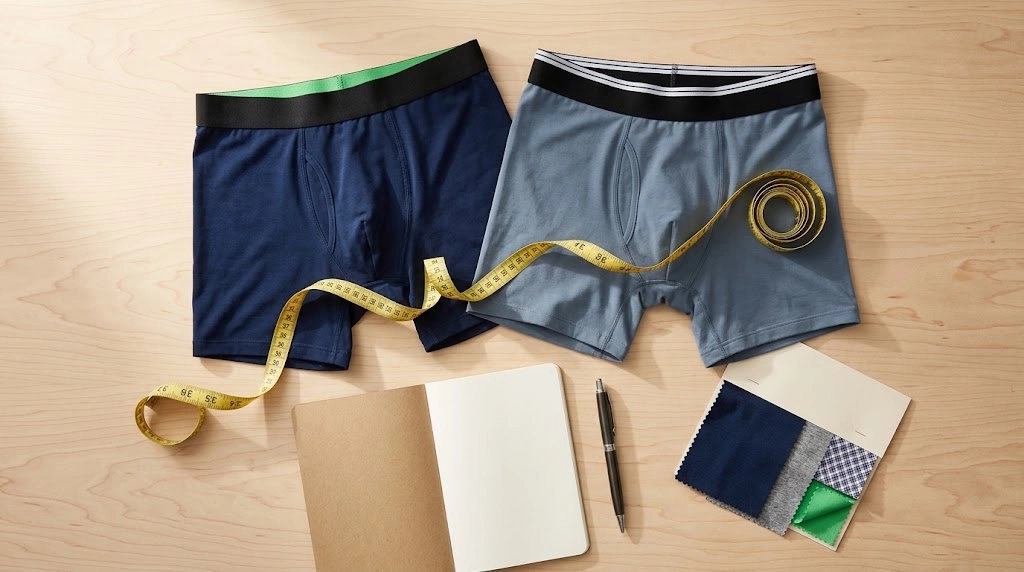
Why sizing affects both comfort and leak-control risk
A size that is too loose can move the gusset or absorbent area away from the body during walking, sitting, or sleep. A size that is too tight can create pressure at the waistband and leg openings, reduce comfort, and make customers less willing to wear the product for the intended period. Neither outcome is solved by adding a larger absorbent layer to an incorrectly fitted garment.
That makes sizing a product-development decision rather than a merchandising detail. The buyer needs a controlled measurement system, clear tolerances, and a sample review that covers movement and laundering.
The final product description should also match the tested use case; fit review cannot turn a light-leakage garment into a claim for heavy or total incontinence.
Tiichoo’s current Men’s range gives buyers several product references for this decision. The category includes washable boxer-brief styles such as 11013, 31052, and 11012, with product-level information on fabric direction, machine-wash care, and intended light bladder-leakage use. The range also states that these styles are not recommended for heavy, severe, or total incontinence. That boundary is useful when a buyer builds a specification and decides which customers the range can responsibly serve.
Build a measurement-based size architecture
Begin with the measurements that control fit on the body and the measurements that control the functional zone. A buyer’s brief should identify the target waist and hip range, rise, side seam, leg opening, waistband stretch, and the width and length of the gusset or absorbent area.
Keep body measurements separate from finished-garment measurements so the supplier can explain ease and tolerance rather than hiding them inside a retail size label.
Choose one primary size system for production. A retailer may show letter, numeric, or regional conversions, but the approved technical file should retain one controlled measurement chart. If the same product will be sold in several markets, record the conversion as a selling aid rather than changing the underlying pattern without a new sample review.
Grade the functional zone deliberately. Increasing the waist and hip dimensions does not automatically place the absorbent area correctly for every size. Review at least the smallest, middle, and largest planned sizes, and record where the front, back, and side coverage begins and ends. This gives the buyer a defensible basis for deciding whether the range needs a new pattern or only a clearer size chart.
Product reference: Review the washable 11013 boxer brief.
Separate fit problems from product-positioning problems
When a sample leaks or feels uncomfortable, do not assume the size is the only variable. Check whether the product is being used in the situation for which it was specified, whether the absorbent area remains aligned, and whether the wearer’s movement changes the garment position. Also check whether the product is being compared with a disposable or higher-protection format that answers a different need.
A useful review records the wearer profile, intended day or night use, expected leakage level, garment size, and movement conditions. It should also note whether the waistband, leg openings, and crotch remain stable after washing. This separates a grading correction from a construction change and prevents a buyer from asking for an unsupported performance promise.
Use SKU-level evidence when comparing wholesale options
Product comparisons are reliable only when the SKU, size, construction, and stated use are comparable. Do not compare an absorbency reference from one style with the fit or material description of another. Record the exact product identity, the approved sample version, the fabric and functional layers, the care method, and the wording that can be used on packaging or a product page.
For a product-level reference, review the washable 11013 boxer brief before defining the sample measurements. Its listed construction includes a cotton-blend main fabric, an absorbent lining, a waterproof layer, and machine-wash care, while the stated use is light bladder leakage. A second reference, the 31052 viscose boxer brief, gives a different fabric direction and four-layer protective lining. The useful buyer action is to compare the approved fit and care requirements for the exact SKU.
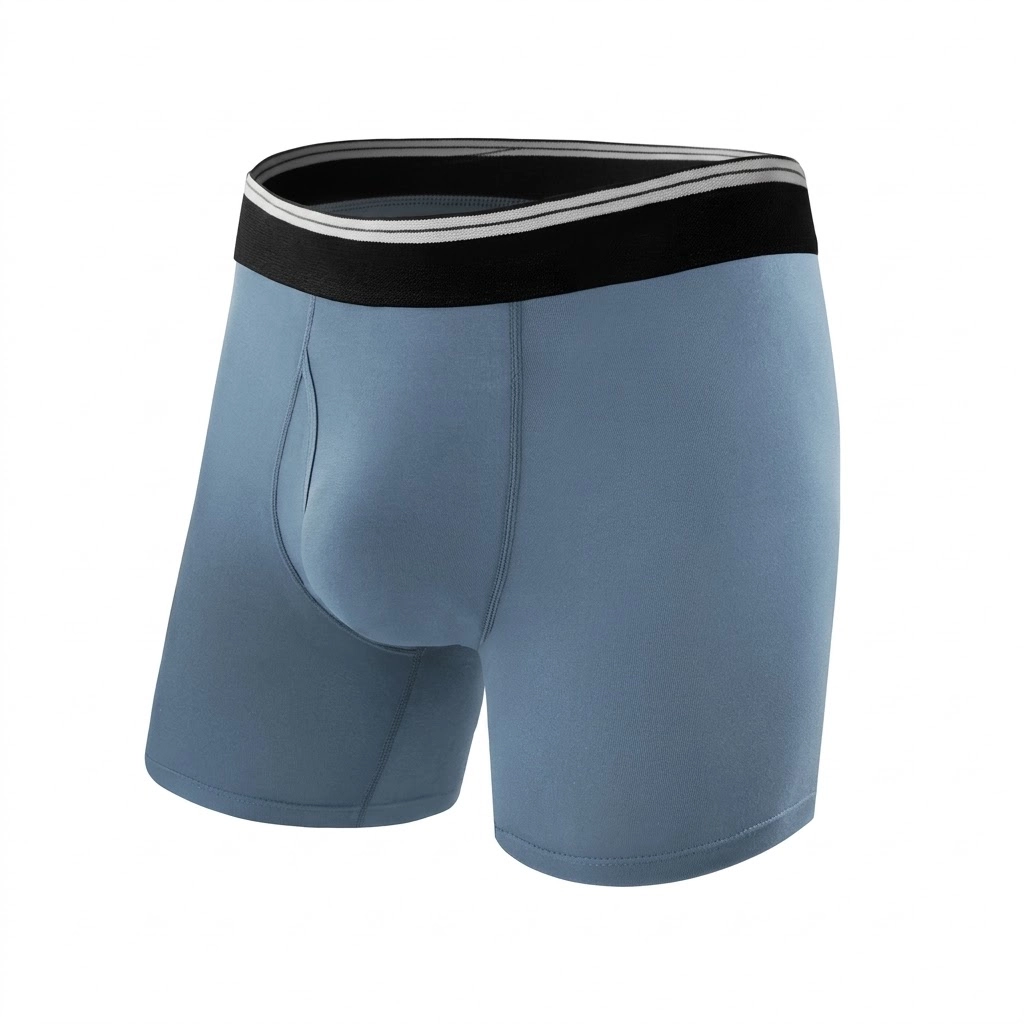
Compare the 31052 viscose boxer brief when the brief calls for a different fabric direction.
Create a sample approval checklist that can be repeated
Sample approval should produce a record that another team can use for replenishment. Start with the style number, version, color, size, and date. Then record the relaxed and stretched waistband, hip, rise, leg opening, gusset dimensions, seam placement, and any points where the garment shifts during normal movement.
Review the garment in the channel’s realistic conditions. For a pharmacy or care distributor, that may mean a familiar underwear silhouette and clear size communication. For e-commerce, the buyer also needs measurements that can be converted into a usable chart and product copy. For a private-label line, check that the size label, sewn-in care information, packaging, and online listing describe the same product.
- Confirm body measurements, finished-garment measurements, and tolerances are kept in separate fields.
- Check waistband recovery, leg-opening pressure, rise, coverage, and absorbent-zone alignment during movement.
- Repeat the key fit checks after the proposed washing and drying method.
- Record the exact SKU and sample version behind every product claim.
- Define the unsuitable use case, including any stated exclusion for heavy, severe, or total incontinence.
Next step: Request a product-specific sample review.
Treat wash care as part of sizing control
Reusable underwear can change shape, recovery, and layer alignment after care. A buyer should approve the wash temperature, machine or hand-wash method, drying method, and any restrictions before finalizing the size chart. If the garment shrinks or the waistband loses recovery, the original fit decision may no longer describe the product customers receive.
The care instruction should be consistent across the sewn label, package, insert, marketplace listing, and brand site. Keep a washed reference sample with the approval record and identify the number of cycles used for the review. Do not publish a durability or wash-cycle statement unless the method and exact product are documented.
Turn the approved fit into a private-label RFQ
A supplier can respond more precisely when the RFQ describes the product task rather than asking for a generic price. Include the target market, sales channel, wearer profile, size range, intended use, preferred silhouette, fabric direction, packaging format, brand elements, sample requirements, and the documents needed for internal approval.
If the buyer wants to change the pattern, grading, gusset, materials, or functional construction, state that clearly. If the existing style already fits the brief, a lighter branding or packaging route may be more efficient. The scope should be confirmed against the selected SKU and order requirements rather than assumed from a general OEM label.
Once the fit is approved, Tiichoo’s light-customization guidance can help the buyer define branding, waistband or label treatment, packaging, and the remaining project scope.
The practical sequence is to select the product, review the sample, confirm the size and use boundaries, then request a project-specific response. This keeps private-label decisions connected to the approved garment instead of treating branding as a substitute for product validation.
Use Tiichoo’s light-customization guidance to separate branding and packaging decisions from deeper product development.
Conclusion: approve fit before you scale the range
A strong incontinence underwear sizing guide ends with a controlled approval decision. Define the body and garment measurements, align the functional zone with the intended use, review movement and post-wash fit, and keep every claim tied to the exact SKU and evidence. If the range is intended for light bladder leakage, say so clearly and do not let a broader keyword create a broader promise.
For a wholesale or private-label project, prepare the size chart, sample notes, target market, quantity estimate, packaging needs, and required documents before the inquiry. Then use the approved sample as the reference for later production and change control.
Ready to move from a sizing brief to a product-specific review? Send the measurement brief, target channel, size range, and sample requirements for a project-specific response.
Frequently Asked Questions
How should buyers choose a size for reusable incontinence underwear?
Start with the supplier’s body-measurement chart, then verify the finished garment measurements, ease, rise, leg opening, and functional-zone position. A size should be judged in the intended use conditions and after the proposed care method. Do not choose only by age, a generic letter size, or a single waist measurement.
Can a larger size improve leak protection?
Not necessarily. A larger size can create movement that takes the absorbent area out of position, while a smaller size can create pressure and discomfort. The correct choice depends on body measurements, pattern balance, garment recovery, and the intended product use. Confirm the exact sample before changing the size range.
What should a wholesale incontinence underwear RFQ include?
Include the target market, channel, wearer profile, size range, intended use, estimated quantity, preferred SKU or silhouette, materials, colors, branding, packaging, sample requirements, and required documents. State which details are fixed and which need supplier input. This gives the supplier a usable basis for discussing scope and samples.
Can a product listed for light leakage be marketed for heavy incontinence?
No. Product positioning must stay within the supported use boundary for the exact style. If the listed product is not recommended for heavy, severe, or total incontinence, that limitation should remain visible in buyer and customer communication. A different use case requires a different product review and supporting evidence.