PFAS-Free Period Underwear Sourcing Guide 2026 – Tiichoo
-
 auteur
- 6th août 2026

Sourcing period underwear for a private-label program now involves more than fabric, fit, absorbency, packaging, and price. Buyers also need to know whether the product claim, supplier declaration, test report, approved sample, and final production specification all refer to the same SKU.
This guide is for brands, retailers, distributors, importers, and e-commerce sellers comparing suppliers or preparing a purchase order. It discusses period underwear as reusable intimate apparel for menstrual-flow management and backup use, without making treatment claims. Buyers must confirm the applicable regulatory classification, registration, testing, labeling, and claim requirements in each destination market.
Why PFAS Verification Matters in 2026
New York prohibits the sale of new apparel containing intentionally added PFAS from January 1, 2025, and its covered-apparel definition includes undergarments. Colorado prohibits the sale or distribution of menstruation products containing intentionally added PFAS from January 1, 2026.
These state rules do not create one national standard, but they change the questions buyers need to ask. The useful question is not simply, “Does the supplier call this product PFAS-free?” It is:
Can the supplier connect that statement to the exact style, materials, colors, test scope, and production order?
Problems often appear late. A report may use an internal fabric code while the purchase order uses a commercial style number. Packaging may already be printed before the claim is reviewed. On a repeat order, a material source may change while the buyer assumes the first report still applies.
Final testing and documentation requirements need to be settled before packaging approval and bulk production.
Start With the Market and Exact Claim
Define the Sales Route
Documentation needs change with the route to market. A direct-to-consumer brand may focus on marketplace wording. A supermarket buyer may need a signed declaration linked to the barcode and retail SKU. A distributor may need records that can be shared with downstream customers.
Before requesting a quotation, define:
- Destination market and sales channel
- Proposed website and packaging wording
- Styles and colors included in the launch
- Retailer or marketplace requirements
- Documents needed before sample and bulk approval
A request that says only “Please quote PFAS-free period underwear” leaves too many questions open. The supplier still needs the selected construction, intended claim, quantity, and required evidence.
Keep the Claim Within the Evidence
“PFAS-free,” “no intentionally added PFAS,” and “selected PFAS not detected” do not mean exactly the same thing.
A supplier declaration addresses whether PFAS was intentionally used in the named product or components. A laboratory report records findings for one submitted sample under a defined method and scope. Neither automatically covers another style, a new color, or future production after a material change.
Packaging copy needs to stay within the available evidence. Avoid broad phrases such as “chemical-free,” “completely toxin-free,” and “guaranteed safe.”
Keep the positioning non-medical. Suitable language includes washable period underwear, reusable period care, leak-resistant construction, everyday comfort, and daily or overnight backup.
Match PFAS Documents to the Exact Product
A period brief may contain body fabric, a skin-contact layer, an absorbent core, a leak-resistant membrane, elastic components, bonding materials, labels, and finishes. A report for the outer fabric alone may not cover the complete garment.
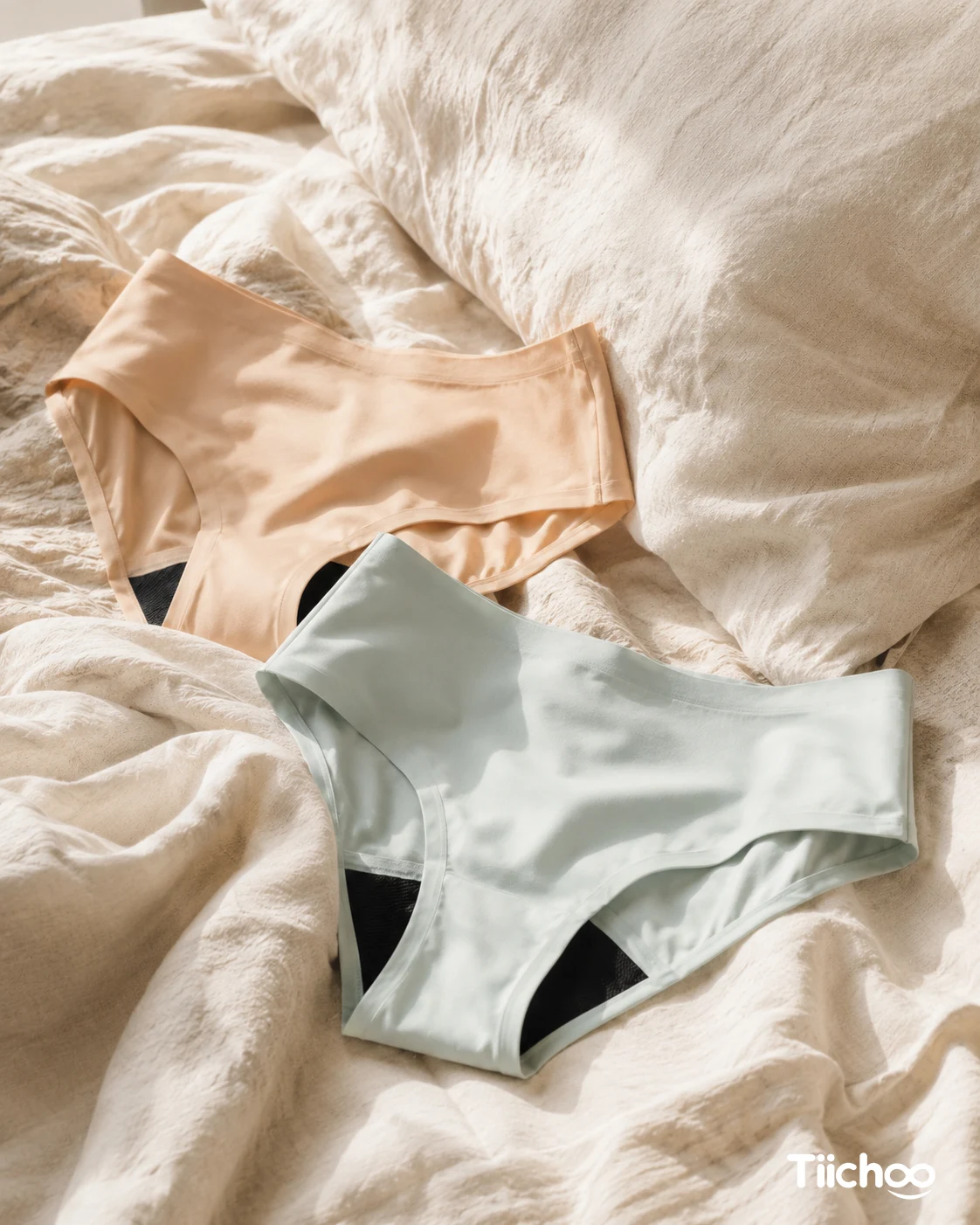
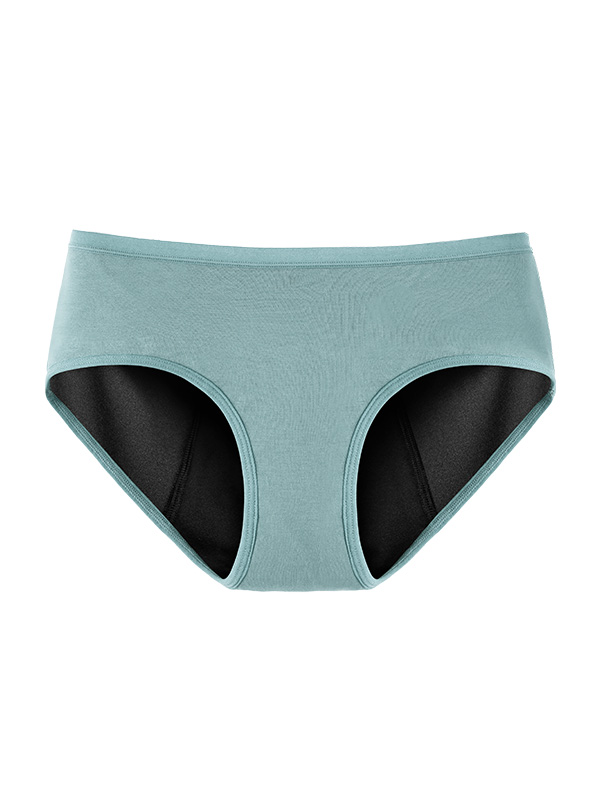
The Seamless Period Underwear for Women-61136 uses an 80% polyamide and 20% elastane body fabric. Its product page lists tested absorbency of up to 30 ml.
The Culotte menstruelle pour femme en viscose - 31001 uses 95% viscose and 5% spandex and is listed with capacity of up to 50 ml.
These figures are product-specific references, not a promise of identical performance in every situation. Actual results can vary with fit, flow rate, movement, absorbent-zone coverage, wearing time, wash history, garment condition, and whether the underwear is used alone or as backup.
Before placing an absorbency number on packaging, confirm the final SKU, test setup, product specification, and intended use case.
PFAS Supplier Verification Checklist
| Verification point | Evidence to request | Common problem | Buyer action |
| Product identity | Style number, photo, sample reference | Report states only “fabric” | Request a direct SKU match |
| Component coverage | Material or component list | Membrane or finish is missing | Clarify coverage |
| Supplier declaration | Signed, dated statement | One statement covers the full catalog | Limit it to named styles |
| Test scope | Sample details, method, analyte list, limits | Claim is broader than the report | Narrow the wording |
| Color coverage | Tested colors or material assessment | A new color uses another process | Review before approval |
| Change control | Written notification requirement | Materials change after sampling | Request updated evidence |
| Bulk consistency | Approved sample and specification | Production differs from the sample | Pause approval |
A PFAS-free period underwear manufacturer needs to connect every supporting document to the product being purchased.
Check the Declaration and Test Scope
A practical declaration identifies the manufacturer, product style, covered materials or components, colors, issue date, authorized signer, and change-notification requirement.
For apparel sold in New York, the compliance certification must identify the specified apparel, state that it complies with the law, and be signed by an authorized manufacturing-company official.
PFAS testing for period underwear may involve total fluorine screening, total organic fluorine screening, targeted PFAS analysis, or a combined route. These approaches answer different questions, so the testing plan needs to reflect the garment construction, destination market, and intended claim.
A “not detected” result applies to the submitted sample, stated method, listed analytes, reporting limits, and test date. It does not automatically cover future production after a material change.
Control the Move From Sample to Bulk
Build a Traceable Sample File
The approved sample file becomes the production benchmark. It needs the style number, color, fabric composition, gusset construction, functional layers, labels, packaging, and relevant report references.
Sample review also covers fit, gusset placement, absorbent-zone coverage, wash stability, label comfort, packaging copy, and SKU identification.
For more detail on MOQ, samples, packaging, sizing, and reorder planning, read Tiichoo’s Women’s Period Underwear Wholesale Guide. Tiichoo’s Wholesale & OEM Buyer FAQ also covers inquiry details, samples, customization, lead times, compliance materials, and repeat orders.
Set Material-Change Triggers
Written notice is useful before changes to the body fabric, fabric mill, membrane, absorbent layer, dyeing process, adhesive, finish, or production location.
A change does not automatically require every test to be repeated. The next decision depends on what changed, whether the original evidence still applies, and what the retailer or destination market requires.
Build an RFQ That Makes Quotes Comparable
The cheapest garment quote is not always the lowest total project cost. One supplier may include sample development, document review, packaging support, and testing coordination. Another may quote only the garment.
A PFAS-focused RFQ works best when it includes:
- Target market and selected style
- Estimated quantity and size breakdown
- Color plan and absorbency positioning
- Branding and packaging format
- Proposed PFAS wording
- Required declarations or reports
- Destination and launch schedule
Ask the supplier to separate existing records from new testing, standard samples from custom prototypes, and garment cost from packaging or development cost.
Tiichoo OEM vs. ODM guide for private-label period underwear explains how the sourcing route affects sampling, customization, MOQ planning, cost control, and launch timing.
How Tiichoo Supports Product-Specific Sourcing
Tiichoo works with brands, retailers, distributors, and e-commerce sellers on ready styles and private-label period underwear projects.
Tiichoo describes an end-to-end QA process covering raw material traceability, manufacturing control, and final inspection. Tiichoo’s materials list support for labeling, relabeling, packaging, special sizing, absorbent-material customization, and standard export documentation. Availability should be confirmed for the selected SKU, quantity, destination market, and project scope.
Tiichoo OEM collaboration process follows eight stages: customer request, quotation, sample submission, sample approval, purchase-order confirmation, payment, manufacturing, and delivery.
For a PFAS-related project, the review focuses on the selected product, destination market, intended claim, customization scope, and the supporting documentation applicable to the selected SKU. Buyers can confirm the relevant documentation and any additional testing requirements during sample application or before bulk approval. New colors, materials, packaging work, or third-party testing can then be addressed separately in the sample plan and quotation.
Conclusion
Sourcing PFAS-free period underwear is a traceability task as much as a product-development task. A strong purchase file connects the intended claim, product construction, supplier declaration, relevant test report, approved sample, material-change controls, and bulk specification.
Buyers do not need a fully finished brief before making first contact. A target market, reference product, estimated quantity, proposed claim, and basic packaging direction are enough to start a useful discussion.
FAQ
Q1: What documents support a PFAS-free period underwear claim?
A: A complete file normally includes a style-specific supplier declaration, relevant laboratory reports, component references, and a clear link to the approved SKU. The final claim must stay within the scope of that evidence.
Q2: Is a signed supplier declaration enough for a private-label order?
A: Sometimes, but not always. The declaration records intentional use, while testing covers a submitted sample under a defined method. A retailer or destination market may request both.
Q3: Can one PFAS report cover several styles or colors?
A: Only when the relevant materials, membrane, dyeing route, adhesives, and finishes remain the same and the records clearly identify those variations.
Q4: Does an OEKO-TEX® STANDARD 100 certificate prove that period underwear is PFAS-free?
A: Not by the certificate name alone. Buyers need to verify the certificate number, covered article, components, current standard edition, and relevant PFAS criteria. OEKO-TEX® uses total fluorine as an indicator, but fluorine may also come from non-PFAS sources.
Q5: When do PFAS documents need review for a repeat order?
A: A review becomes relevant after changes to material sources, colors, functional components, production locations, product claims, retailer requirements, or destination-market rules.