Midlife Women’s Leak Protection 2026: A Private Label Sourcing Guide
-
 auteur
- 27th août 2026

Midlife women’s products are becoming a more visible part of the intimate-apparel market in 2026. For underwear brands, importers, distributors, and private-label retailers, women’s leak-protection underwear offers a natural extension beyond period underwear and conventional basics.
The opportunity is easy to see. The harder part is choosing a product that customers will actually want to wear.
For buyers, that means looking beyond one absorbency number or one factory quote. Fit, coverage, fabric feel, washability, discreet styling, and production consistency all affect whether a product works at retail and earns repeat orders.
Tiichoo supplies incontinence underwear for women for wholesale and private-label programs. The category is built around comfort, discretion, reusable wear, and practical protection rather than medical positioning.
Why Midlife Leak Protection Fits the Intimate-Apparel Market
Brands already selling period underwear, reusable hygiene products, or women’s basics do not need to treat leak protection as a completely separate business.
The strongest products still look and feel like underwear. That matters for customers who want extra protection without changing the way they dress for work, travel, daily errands, or light activity.
For a B2B buyer, the opportunity is therefore less about creating a “menopause product” and more about adding a useful functional style to an existing women’s assortment.
Period Underwear and Leak Protection Need Different Specifications
Period underwear has made absorbent underwear familiar to a much wider customer base. That does not mean the same specification should be reused for every type of fluid protection.
When sourcing women’s leak-protection underwear, the absorbent area, front and rear coverage, waistband stability, and fit during movement deserve a fresh look.
A product worn through a normal day needs enough protection to give the wearer confidence, but it also needs to remain comfortable and discreet under clothing.
That combination is what makes the category relevant to underwear brands rather than only care-product sellers.
Define the Product Before Asking Factories to Quote
A useful sourcing brief should tell the supplier what the buyer is actually trying to sell.
Before asking for prices, confirm the intended protection level, style, size range, fabric direction, estimated quantity, target price position, sales channel, and level of customization.
Without that information, two quotations can represent very different products.
One supplier may be quoting an existing wholesale style. Another may already include new packaging, labels, sizing changes, or product development. Comparing those numbers alone does not tell the buyer which offer is better.
Compare the Product Before You Compare the Quote
Once the product brief is clear, the quotation becomes easier to judge.
Unit cost matters, especially for distributors and high-volume retail programs. But saving a few cents per piece does not help if the final product creates sizing complaints, packaging rework, or inconsistent repeat orders.
For functional underwear, the product has to work commercially as well as technically.
Match Absorbency to the Product Position
More absorbency is not automatically a stronger selling point.
Extra absorbent material can add thickness and weight, and a bulkier garment may not fit a brand that wants discreet everyday underwear. The right specification depends on how the style will be positioned and worn.
Tiichoo Women’s Incontinence Underwear 31003 is designed for mild-to-moderate bladder leakage. It uses a four-layer leak-resistant construction with built-in absorbent layers, and Tiichoo lists the style at approximately 50 ml absorbency.
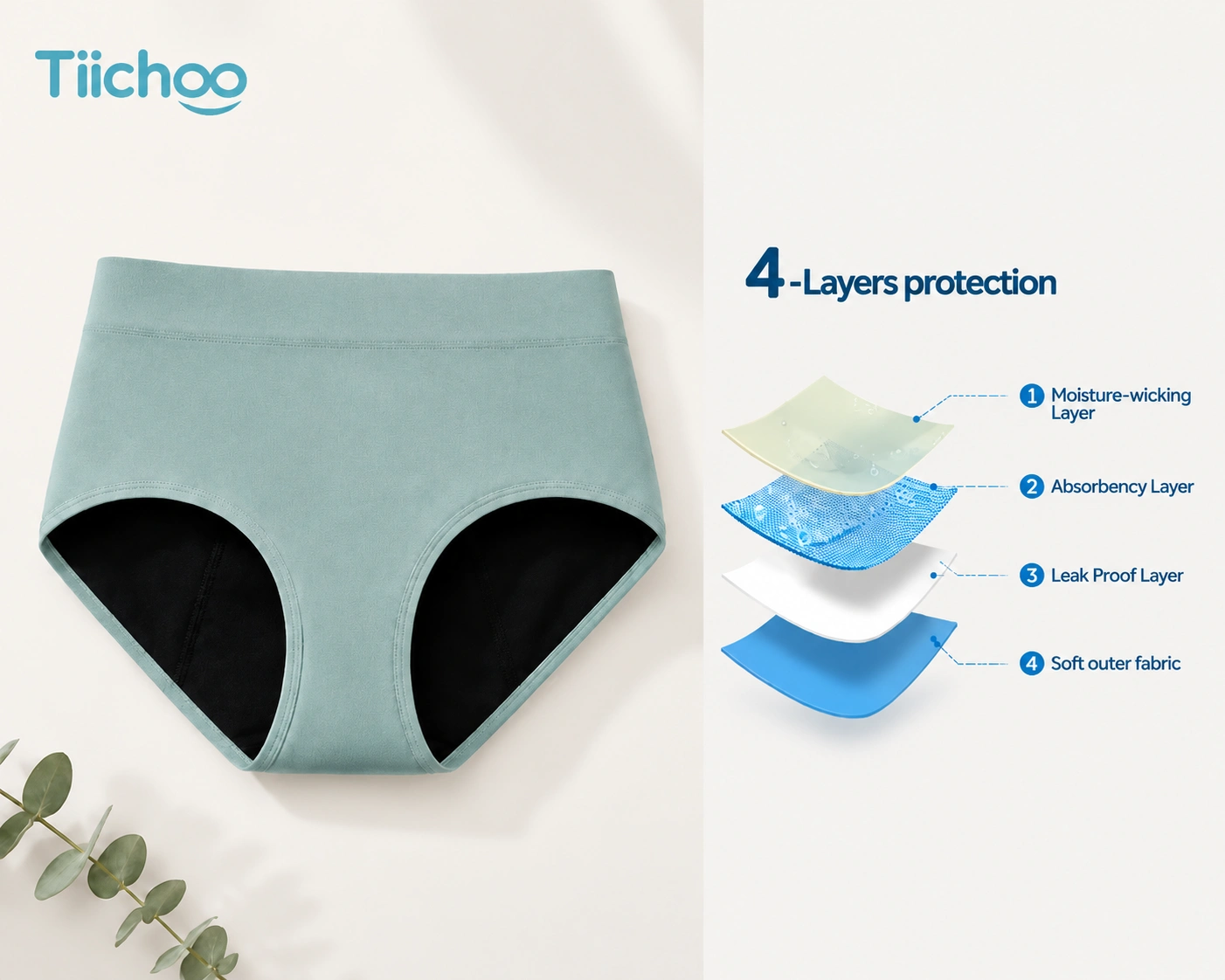
The extended, higher and wider lining provides broader leak-protection coverage, while the regular-underwear appearance keeps the product suitable for everyday wear. That combination gives brands a clear product position: functional protection without moving into a bulky or clinical-looking format.
The 50 ml figure refers to the product’s tested absorbency reference and should be evaluated together with garment fit, coverage, and intended use. For B2B sourcing, the important point is that buyers have a defined absorbency reference they can compare alongside fit, coverage, and garment construction.
Comfort Is Part of the Product Performance
Protection alone will not create repeat purchases.
The 31003 body fabric is 95 % viscose et 5 % élasthanne, giving the style a soft, flexible everyday-underwear feel. The high-waist construction provides fuller front and rear coverage, while the wider waistband is designed to stay in place during wear.
The garment is also machine washable, making it suitable for repeated everyday use.
These are practical selling points for brands targeting customers who want washable protection without giving up the familiar feel of regular underwear.
During sampling, buyers can focus on the details that directly affect the customer experience: fit, waistband comfort, coverage, appearance under clothing, handfeel after washing, and size consistency.
That is far more useful than comparing fiber percentages on paper without wearing the product.
How to Evaluate an Incontinence Underwear Manufacturer
A good incontinence underwear manufacturer does more than send a price list.
For private-label buyers, the real test comes after the sample is approved. The bulk order needs to follow the same fit, construction, labeling, and packaging that the buyer signed off on.
This is especially important for functional underwear, where relatively small changes in measurements, elastic tension, or lining position can change how the garment feels.
Use the Approved Sample as the Production Standard
Before confirming a purchase order, buyers should lock down the details that matter to the finished SKU:
- approved style and sample;
- key measurements and fabric;
- absorbent construction and coverage;
- labels and barcode information;
- final packaging and approved product wording.
Tiichoo OEM collaboration process moves through quotation, sampling, sample approval, PO confirmation, manufacturing, and delivery.
That workflow gives buyers clear approval points before production begins. Measurements, labels, packing artwork, and customization details can be settled while changes are still easy to make.
For an importer or private-label brand, this is where supplier consistency starts to matter more than a small difference in quotation.
Start With a Ready Style Before Paying for Unnecessary Development
Not every new range needs a new product from zero.
Selected Tiichoo ready styles start from 10 sets for wholesale orders, and buyers can order samples before moving into bulk purchasing. This gives brands, importers, and distributors a practical way to review the actual product first.
If the ready style already matches most of the brief, the project can move into branding, labels, packaging, and other private-label details without rebuilding the product unnecessarily.
For buyers who need a different fabric, construction, or product concept, Tiichoo also supports deeper customization at higher order volumes.
Current sample, MOQ, branding, customization, and lead-time details are available in the Tiichoo Wholesale & OEM Buyer FAQ.
Building a Private-Label Women’s Leak-Protection Line With Tiichoo
A strong private-label project usually starts with the closest product match.
That approach gives the buyer a real garment to assess instead of spending the first round discussing an abstract specification. The team can check the fit, feel, coverage, washability, sizing, and retail position before deciding how much customization is actually needed.
Start With a Proven Product Direction
Tiichoo 31003 gives buyers an existing women’s leak-protection style built around three clear priorities: everyday comfort, discreet appearance, and reusable protection.
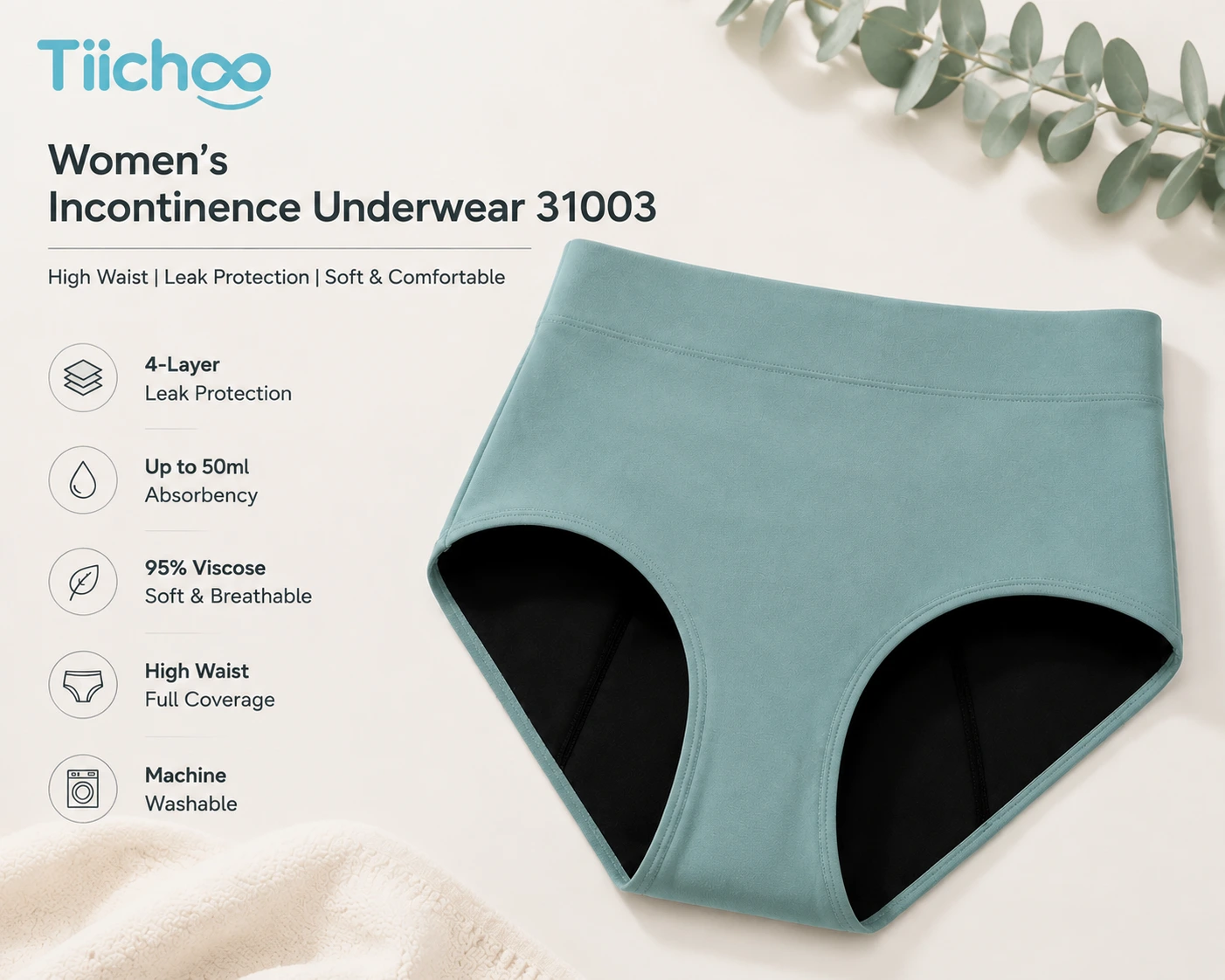
Its viscose-rich fabric supports a soft underwear feel. The four-layer leak protection construction provides functional leak protection. The extended lining increases coverage, while the high-waist cut gives the garment the familiar shape of everyday women’s underwear.
For an apparel, reusable-hygiene, or private-label brand, its value is that it already combines functional construction with a format customers recognize.
Buyers can then decide how far they want to take the brand development—custom labels, barcodes, packaging, size planning, or a deeper OEM program.
For more detail on choosing between an existing-product route and deeper development, see Tiichoo’s OEM vs. ODM Guide for Private-Label Buyers.
What to Include in an RFQ
A clear RFQ gives Tiichoo enough information to recommend the right sourcing route and prepare a quotation around the actual project rather than a generic product request.
For most projects, the first inquiry can include:
- the reference product or preferred style direction;
- quantité de commande estimée ;
- required size range;
- destination market and sales channel;
- branding or packaging requirements;
- expected level of customization.
A target price range, packaging concept, or existing artwork can also be included when available.
Based on these details, Tiichoo can match the inquiry with suitable ready styles, confirm sample options, define the customization scope, and quote the project on a clearer basis. If an existing style already meets most of the brief, the project can move toward sampling and private labeling without unnecessary redevelopment.
Conclusion
The 2026 menopause trend is bringing more attention to products for midlife women, but buyers do not need to build the range around a trend label.
A good women’s leak-protection product still comes down to familiar retail fundamentals: comfortable fit, useful coverage, appropriate absorbency, washable construction, discreet styling, and consistent bulk production.
Tiichoo’s 31003 offers brands an established starting point with a viscose-rich body fabric, four-layer leak protection construction, extended coverage, a high-waist everyday-underwear design, and a listed 50 ml absorbency reference for mild-to-moderate leakage.
For B2B buyers, the next question is whether that ready style fits the planned range or whether the project needs additional private-label development.
Tiichoo supports product sampling, incontinence underwear wholesale, and private-label cooperation for brands, importers, distributors, and retailers. Send your target quantity and basic product requirements to review suitable product options and discuss the next step toward a bulk order.
Request Samples or a B2B Quotation from Tiichoo
FAQ
Q1: What product specifications matter most when sourcing incontinence underwear for women?
A: Focus on absorbency positioning, coverage, fit, fabric, washability, sizing, and garment bulk. For private-label programs, buyers should also confirm whether the approved sample can be reproduced consistently in bulk production.
Q2: How much absorbency should women’s incontinence underwear provide?
A: The right level depends on the product position and intended use. Tiichoo 31003 is listed at approximately 50 ml absorbency and is designed for mild-to-moderate bladder leakage. Buyers should compare absorbency together with coverage, comfort, and garment construction rather than selecting a style by capacity alone.
Q3: What is the MOQ for Tiichoo wholesale or private-label incontinence underwear?
A: Selected Tiichoo ready styles start from 10 sets for wholesale orders. Private-label and deeper customization requirements depend on the type of branding, packaging, material, or design changes involved.
Q4: Can buyers order samples before placing a bulk incontinence underwear order?
A: Yes. Buyers can order samples before bulk production and use them to confirm fit, handfeel, sizing, coverage, washability, and overall product positioning.
Q5: What should buyers expect from an incontinence underwear manufacturer for private-label production?
A: The supplier should be able to match the approved sample in bulk, keep product specifications clear, manage labels and packaging accurately, and provide a defined process from quotation and sampling through production and delivery.